
Hello From Kenya
Reflections from Mukuru on Food, Health, and Humanity

As we move into 2026, I wanted to reflect on the year and my time thus far in East Africa. I have been privileged to live in multiple places around the world, and with each new country, the adjustment period varies. There are mixed emotions arriving in a place where I know no one and have to navigate challenges for the simplest activities. Yet it is precisely through discomfort, both ordinary and sometimes overwhelming, that I’ve found the confidence that I can handle whatever comes my way.
Nairobi is notorious for the social scene (in the best way). My network has connected me with great people from many industries and circles of friends. Everyone has been supremely inclusive. Just this past Sunday, after leaving a yoga class, I sat outside the studio in the garden with a book. A Kenyan woman from the class had the same idea. I asked her what she was reading, which sparked a dialogue that led us to spend over four hours together, getting in a cab together for lunch and sipping cocktails in the late afternoon, talking about love, life, and the meaning of our work.
In the time I’ve been here, I’ve settled into a routine, explored the beautiful coast and up-country forests, gotten to know my co-workers, and embraced a very social life - filling each moment with coffees, dinner parties, and walks with new friends.
On the work front, it feels good to be working full-time again after completing graduate school. In my new role with Tanager as a Senior Strategist, I am working on capacity building local African Agriculture Institutions across Kenya, Burkina Faso, Tanzania, Ethiopia, and Nigeria to continue to deliver their agriculture and market system services with a gender and nutrition lens. This not only promotes equity and health through our value chains, but also creates more profit. The desired “double bottom line” dynamic we often hear but is not often realized.
From a professional development perspective, this has been important for me, given my prior development work has been at the community level – living, working, researching alongside the farmers and women in villages. Through this opportunity, I am bridging the gap in my knowledge of technical assistance at the system level. That said, it is critical to continue to learn from the people my work ultimately aims to serve. So, since arriving, I have been seeking out opportunities to learn from the locals in Nairobi.
In Nairobi, the wealth gap is apparent as it is in San Francisco, New York, New Delhi, and many other places around the world. Here, the large slums such as Kibera and Mukuru are a mere 15-minute car ride away from expensive high-rise apartments and businesses. Combined, the Nairobi slums are home to over 2.5 million people.
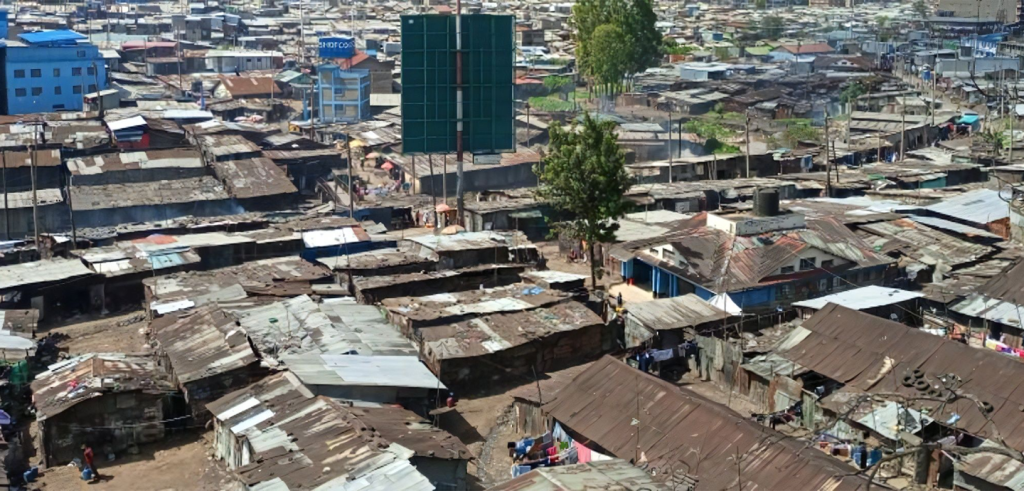
Mukuru, Nairobi, Kenya (image source)
Last week, I had an opportunity to shadow a pediatric nutritionist in Mukuru, only 20 minutes from my home. Yet it felt like a world away. The clinic reminded me a lot of Oda Foundation’s basic infrastructure, serving the most vulnerable with minimal resources and money for upkeep. Still, the pediatric room had brightly colored walls featuring animals and a few stuffed animals to give the children something to focus on as we wrapped the MUAC tape around their arms. The Mid-Upper Arm Circumference (MUAC) is a simple, fast tool used globally, especially in humanitarian aid, to screen children (6-59 months) and sometimes adults for malnutrition by measuring the circumference of the upper arm at its midpoint.
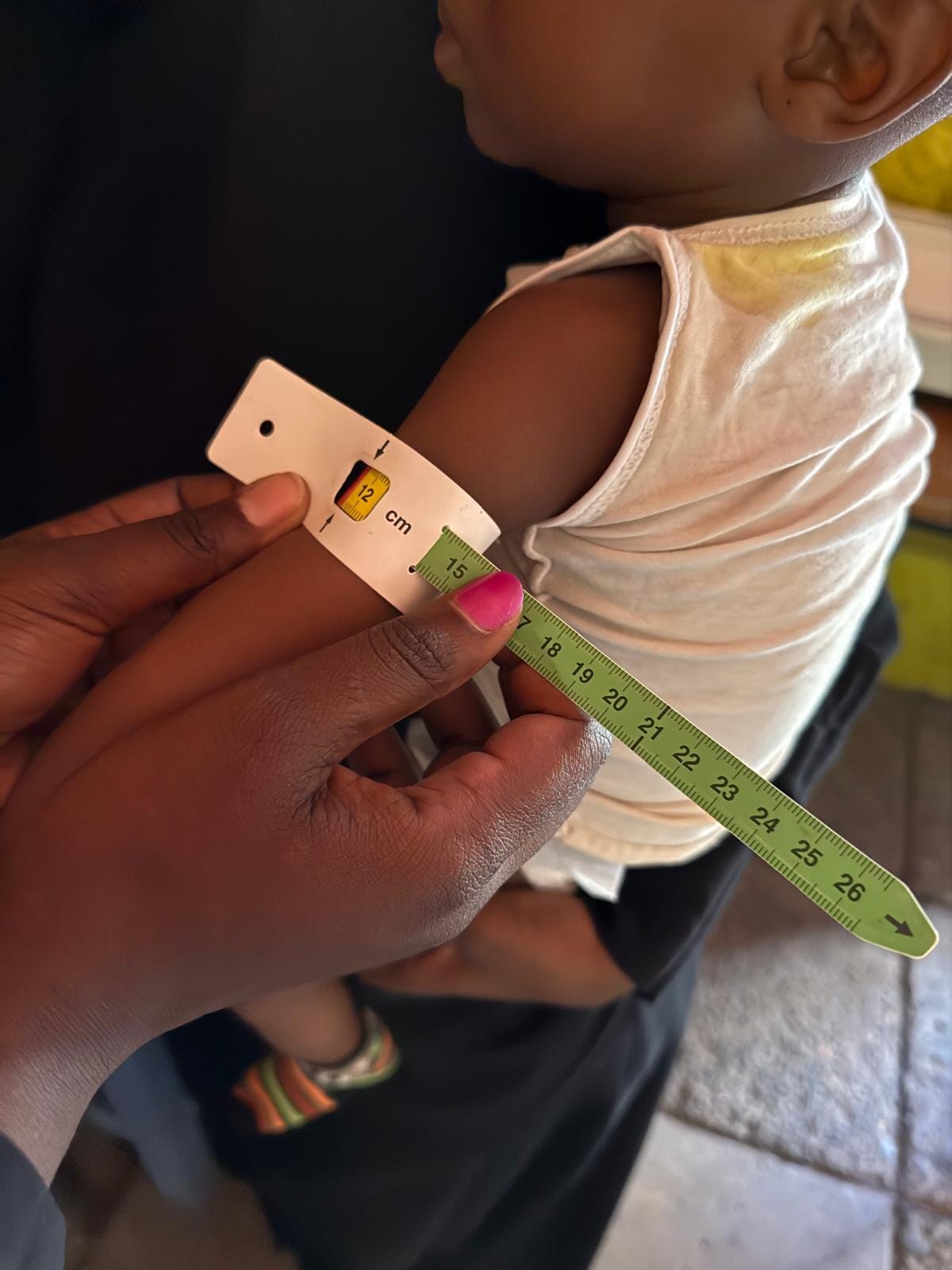
As we measured the height, weight, and MUAC of these children, I took notice of a few things. In between patients, I asked the doctor questions, and she translated what had been said, what she knew about that family, and additional considerations. Below are my reflections and context from the doctor:
It was only mothers who brought in the children for their bi-weekly check-up to see if conditions were improving. I inquired how often a father comes, and the nutritionist said that of the hundreds of patients she sees a month, it’s about one father who brings a child. It led us to discuss the dynamics of male labor, child responsibility, issues of single mothers in the slums, and the burden of child healthcare, primarily falling on the mother, to miss work to take the child to an appointment.
The most malnourished children I saw were often the children who were not watched by their mothers. The mom had to go to work, leaving the young one with a neighbor or friend who did not receive the nutritional information from the doctor directly or could not feed another mouth at the expense of their own child.
The dual burden of malnutrition was prevalent. The dual burden of malnutrition (DBM) is the coexistence of undernutrition (stunting, wasting, micronutrient deficiencies) and overnutrition (overweight, obesity, and diet-related non-communicable diseases like diabetes, hypertension) in the same population, household, or even individual, often due to rapid “nutrition transitions” in low- and middle-income countries. This complex challenge means people suffer from both undernourishment and excess calories/poor diet quality from ultra-processed food. This impacts health and economic outcomes across the entire life course, from childhood stunting increasing adult obesity risk and lowering brain cognition, to households having both an underweight child and an overweight mother (pictured below from my day in the clinic).
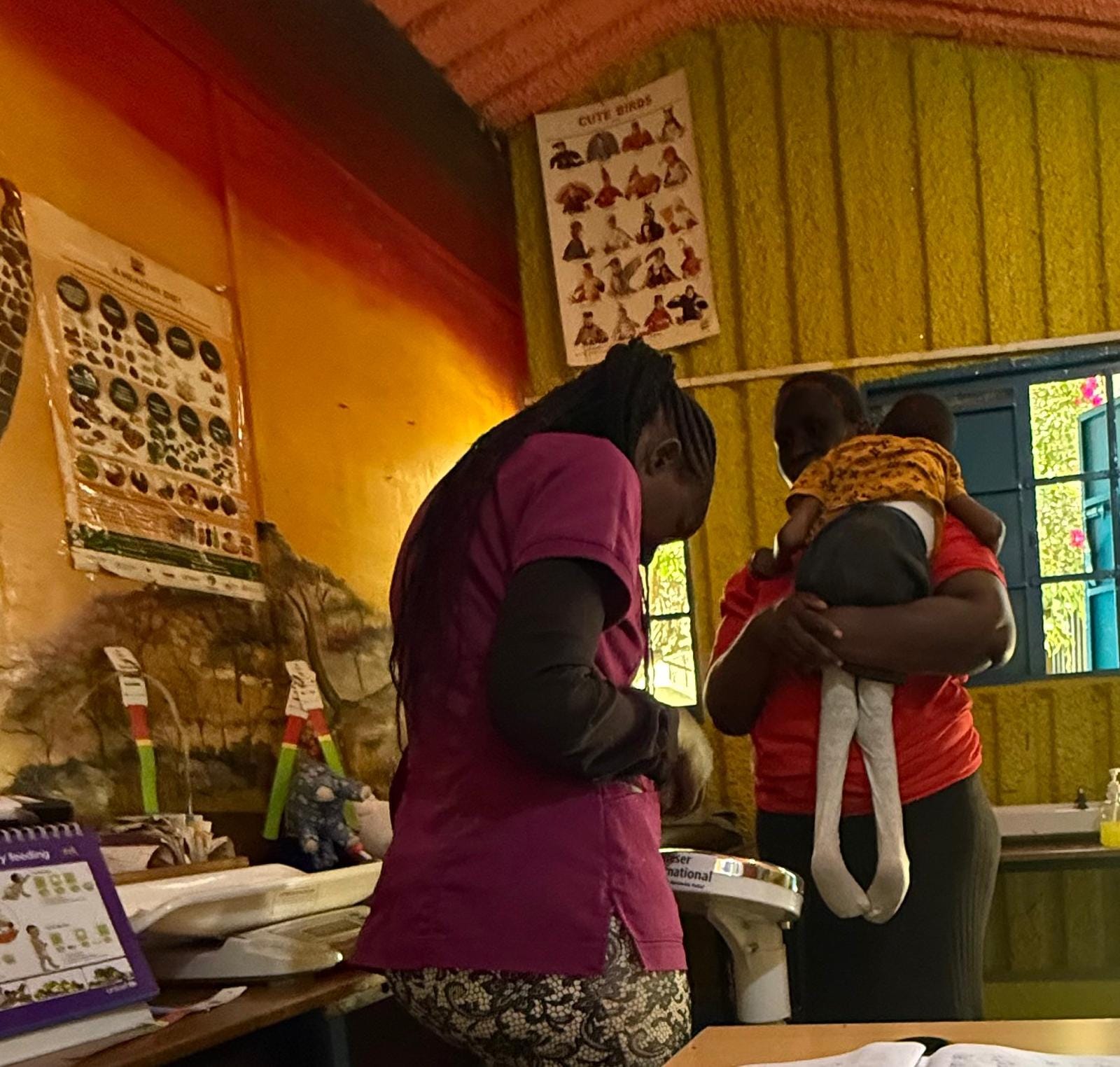
Note that I received consent for all photos taken, but still blurred faces for privacy
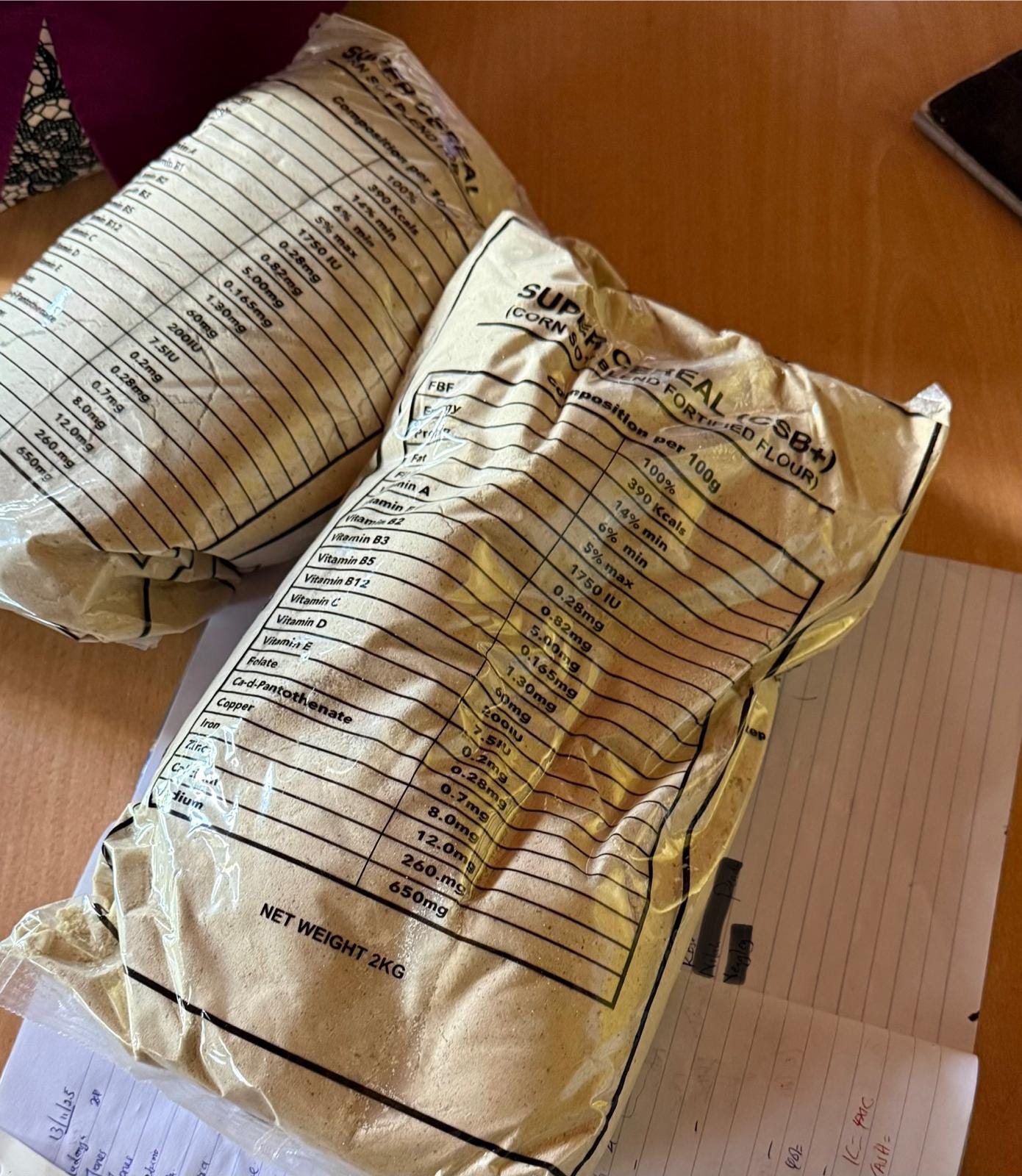
As I recorded the numbers the doctor read out for each child, I could see their previous measurements. Often, the child’s weight and MUAC were not improving even though the clinic had been providing them with nutritional powder sacks for weeks. This nutritional powder is to be mixed with clean water and fed to the children 4-6 times per day because smaller and more frequent meals make it easier for the stomach to absorb nutrients. However, when I asked the doctor why the babies were not getting better, she explained that a common issue is that the mother will turn around and sell the nutritional powder so she can buy rice, oil, and other basic needs that benefit the entire family. These mothers face an impossible choice: stretch one packet of powder across several children, knowing none may receive enough to truly thrive, or buy cheaper food so everyone eats, but no one is fully nourished.
When the clinic broke for lunch, I was invited to sit with the doctors at a little food stall a few blocks away. We ate pilau and chapati, discussing the dynamics of the clinic and questions that had surfaced from my few hours observing. The doctors explained how painful it was to continuously be putting a band-aid on the prominent health issues in the sprawling urban slums.
I explained my new role working on systems-level change related to nutrition: social and behavior change, how food companies can integrate more nutritious foods into their marketing, and how to support healthier food choices across African nations. We discussed the importance of both downstream and upstream approaches to poverty alleviation. When we focus only on downstream solutions, we risk becoming foot soldiers for injustice, but when we work only at the systems level, we can become disconnected from those we hope to support. Balance in this field is essential to ensure appropriate root cause solutions.
I came home emotionally worn. However, there was a renewed sense of clarity that only comes from direct, human experience. Being in the community reminded me why proximity matters, and why this work must remain rooted in lived realities.
On arriving back at the house, I asked my askhari (security guard), Collin, how his day was going. In Nairobi, many homes, offices, shops, malls, etc. have security presence. Askharis are omnipresent. Many of them commute from the slums I had just spent the day in.
Collin gave me his gentle and kind greeting as usual. But now, after seeing where he lives, I inquired deeper into his life. I asked him how he got to the house everyday and he told me he walked for over an hour and a half each way because the bus was too expensive. He opened up, sharing that he makes 300 shillings a day ($2.20), working 7 days a week with no break. I shared about my day and what questions I still had about healthcare access, livelihood options, and more. We stood there chatting as I deepened my understanding of the reality just across the way.
For years, Collin has looked for higher-paying roles, but the high unemployment, particularly for youth, makes finding work difficult. With 80% of the Kenyan population below 35, there is a need to consider upskilling the young with opportunities for an evolving world. Collin said that while this role is consistent, it barely allows him, his wife, and two young boys to eat twice a day. He said it is not an option for new clothes for his children or to buy meat. When I asked if it would be better to return to his village, he said definitely not, as there is no work there and the land is drying up. The main form of employment (farming) is becoming increasingly difficult, a major driver of migration to the city.
I have been pondering it all since. My Master’s degree concentration was in agriculture, food systems, and rural livelihoods. My interest lies in the rural communities left behind by much of the world. However, urban and rural lives are deeply intertwined, and many in these slums come from rural areas seeking better opportunities.
As I write this, my mind keeps returning to immigration dynamics, the waning interest of young people in agriculture, and the chicken-and-egg problem of healthcare versus productivity: we expect people to be productive to afford healthcare, yet productivity itself is undermined when basic needs like nutrition go unmet. As technology replaces many non-specialized jobs, how will we build work ecosystems that can employ growing populations? How will we create enough jobs that pay a living wage so people can afford food, healthcare, and education?
Seeking answers and solutions to some of the most complicated dynamics in our world only leads me to ask more questions, realizing how little I know and how much more I have to understand. A quote that has guided me for years has been coming to mind a lot here.
“Courage is the quality most essential to understanding the language of the world” - Paulo Coelho.
With courage, I will keep pushing beyond my comfort zone, learning and listening deeply so I can turn those insights into meaningful impact with and for others, particularly now that I have the opportunity to contribute at a systems level in my new position.
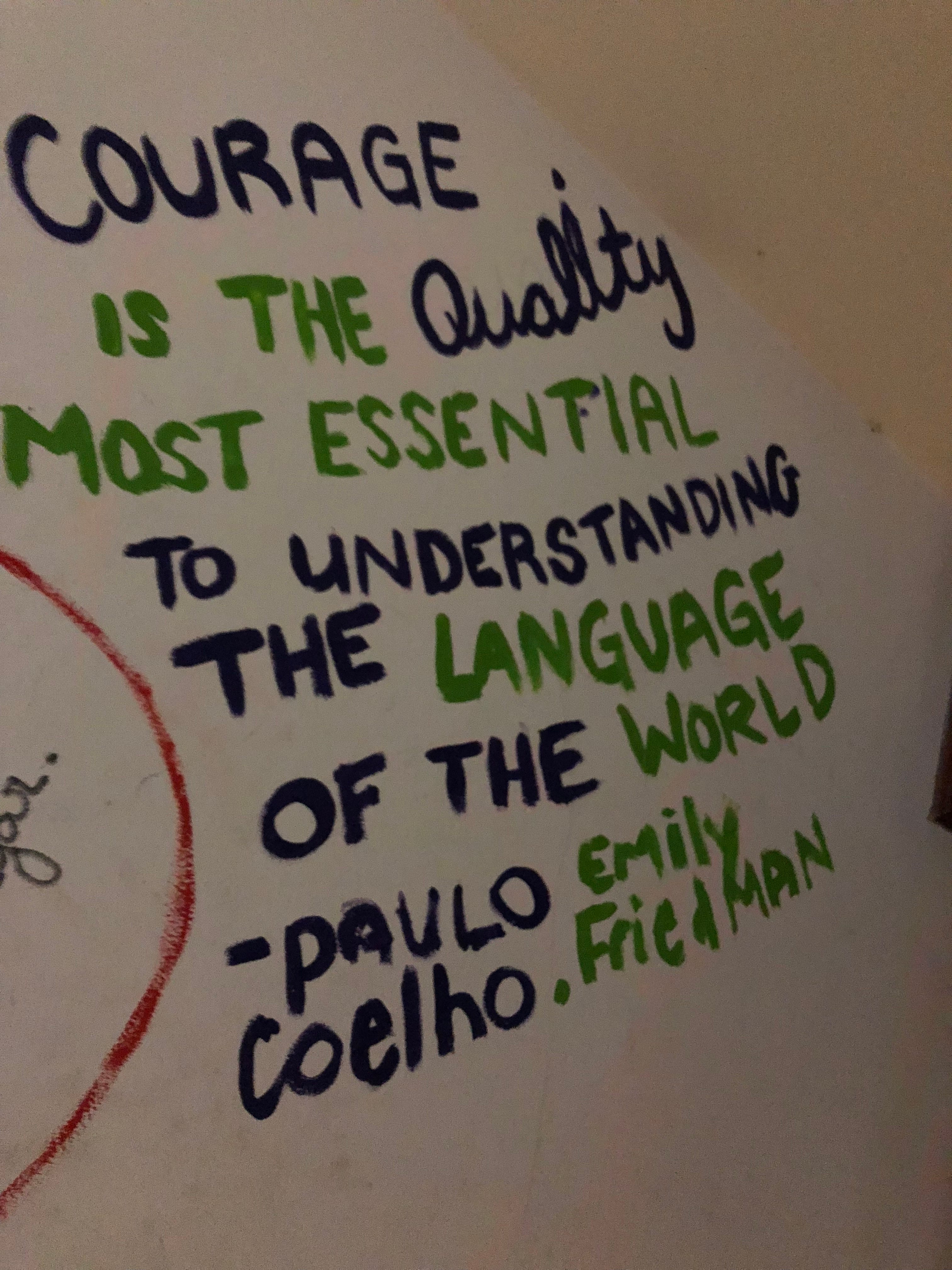
Hanoi, Vietnam, 2018, a hostel wall on my first solo backpacking trip.
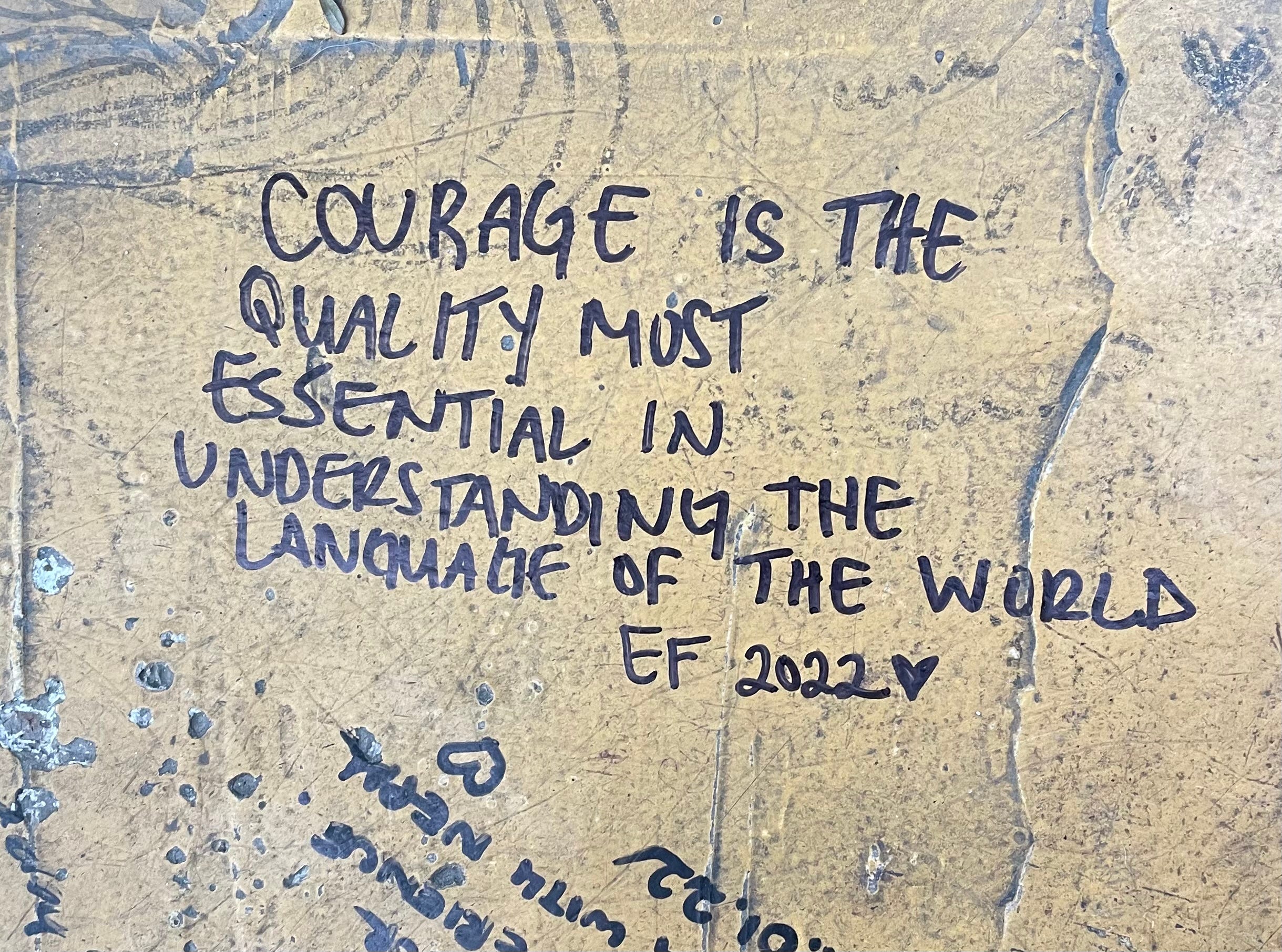
Kathmandu, Nepal, 2022 Written on a pub wall in Thamel.
May 2026 be a year of courage for all of us. A year of stepping beyond our comfort zones in whatever ways feel meaningful, having conversations we might otherwise avoid, and recognizing the shared humanity that binds us together.
With care,
Em